
Quality and traceability
What is bacteriostatic water? Composition and grades
NuuVive Journal · · 6 min read
Short answer
Bacteriostatic water is a sterile, nonpyrogenic aqueous liquid composed of a highly purified water base and a precise concentration of benzyl alcohol, typically 0.9 percent. The benzyl alcohol acts as an antimicrobial preservative, inhibiting bacterial proliferation and allowing repeated sampling from a multi-use vial. Laboratory-grade versions undergo strict analytical testing for pH, endotoxins, sterility and exact preservative content.
Key takeaways
- The liquid contains two ingredients: highly purified water and a specific concentration of benzyl alcohol.
- The 0.9 percent benzyl alcohol addition prevents microbial proliferation, separating it chemically from single-entry sterile water.
- Quality verification requires multiple tests including gas chromatography for the preservative and limits for endotoxins.
- High concentrations of benzyl alcohol present unique challenges in liquid chromatography, often causing sample carryover in analytical instruments.
- A certificate of analysis must name a specific lot number that links the testing data directly to the vial in hand.
A composition with two components
Open a laboratory refrigerator and you will likely find a row of small vials filled with clear liquid. To the naked eye, it looks like plain water. But ordinary water is an open invitation to microbial life. Once a seal is breached to draw a sample, unprotected water becomes a rapid breeding ground for environmental contaminants. That is where bacteriostatic water steps in. It is a controlled laboratory supply engineered to solve a very specific problem: how to maintain a sterile liquid environment across repeated vial entries.
The composition is stark in its simplicity. Bacteriostatic water contains a highly purified base combined with a single active preservative: benzyl alcohol. The concentration of this preservative is closely guarded by compendial standards, resting at 0.9 percent, or 9 milligrams per millilitre. That seemingly tiny addition transforms the liquid from a fragile, single-entry resource into a stable medium capable of resisting contamination over its working lifespan.
You might wonder why scientists do not simply use stronger solvents. The goal is balance. The liquid must preserve the integrity of complex synthetic peptides and reference standards without degrading their molecular structure. Benzyl alcohol achieves this delicate truce, providing reliable antimicrobial protection while remaining largely inert toward the target compounds dissolved within it.
The chemistry of holding static
The secret to the liquid's stability lies entirely in phenylmethanol, the chemical name for benzyl alcohol. As an aromatic alcohol, it features a benzene ring attached to a hydroxymethyl group. It is a clear, colourless compound with a faintly sweet, aromatic odour. But its true value in the laboratory is mechanical. Benzyl alcohol does not aggressively destroy microorganisms on contact the way bleach or harsh sterilising agents might. Instead, it acts bacteriostatically. It inhibits the reproduction of bacteria, holding any introduced microbes in a state of suspended animation.
| Property | Specification |
|---|---|
| Chemical Name | Phenylmethanol |
| Molecular Formula | C7H8O |
| Molecular Weight | 108.14 g/mol |
| Concentration | 0.9% (9 mg/mL) |
This static approach is deliberate by design. By preventing replication, the preservative ensures the microbial load never reaches a threshold that could compromise a laboratory sample or skew analytical results. It buys the analyst time. When you are measuring the mass spectrometry profile of a delicate synthetic peptide over a multi-day study, the last thing you want is a blooming bacterial colony altering the baseline.
Compendial specifications and rigorous testing
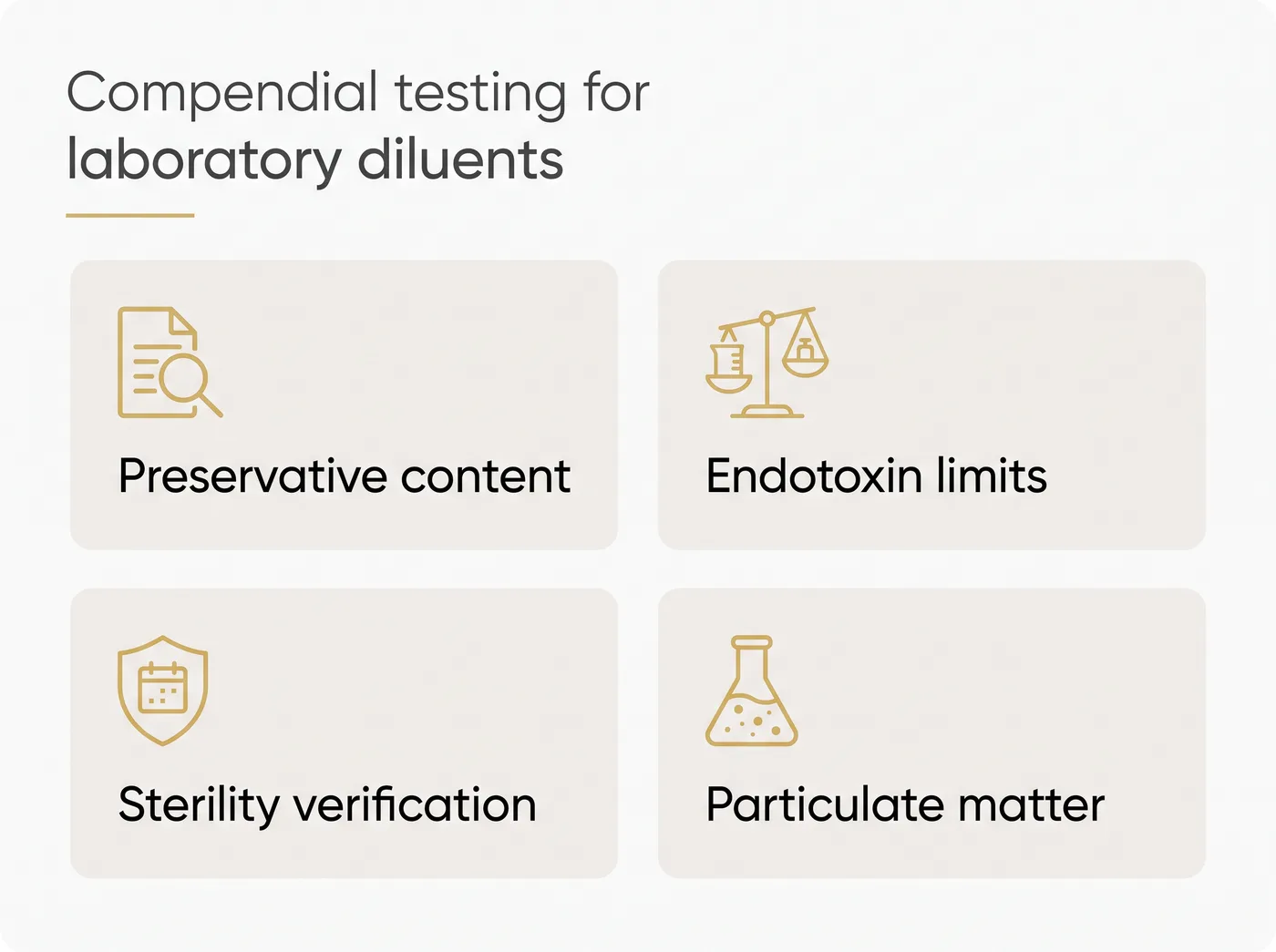
A vial of bacteriostatic water cannot rely on good intentions; it must prove its purity through a battery of tests. Establishing specifications for biological and biotechnological materials requires a strict list of tests, analytical procedures and acceptance criteria ICH Q6B. For this liquid, the testing parameters are strict and unforgiving.
- Endotoxin limits: The finished liquid must contain less than 0.5 Endotoxin Units per millilitre, a stringent cap on pyrogenic material.
- Sterility: The preparation must demonstrate a complete absence of viable microorganisms before the seal is broken.
- Particulate matter: Analysts screen the liquid to ensure sub-visible particles remain below established compendial thresholds.
- Preservative assay: The exact 0.9 percent concentration of benzyl alcohol must be verified, often using gas chromatography.
- pH parameters: The liquid typically exhibits a measured pH near 5.7, restricted within a narrow acceptable range.
Quality systems demand that every batch is fully traceable. Regulatory definitions require a lot number, a distinctive combination of letters or numbers from which the complete history of manufacture can be determined 21 CFR Part 210. Without that lot number linking the vial to its certificate of analysis, a test report is nothing more than a historical fiction. You are holding a product, and the laboratory tested a sample, but nothing connects the two.
Quality grades and laboratory sourcing
Bacteriostatic water is manufactured across different regulatory classifications. While the chemical composition remains identical, the paperwork and intended applications diverge. Research-grade materials are supplied exclusively for laboratory use, such as dissolving reference standards or performing sample preparation. These materials are governed by rigorous manufacturer quality systems and must still meet the strict compendial specifications for chemical and physical parameters.
When sourcing materials for analytical work, transparency is essential. The laboratory controls and traceability of the batch records define the reliability of the supplier. A good manufacturing framework ensures that laboratory records capture everything from reference standards to sampling plans ICH Q7. If a supplier obscures their testing methods or provides a certificate lacking a specific date and lot number, they are daring you to trust them blindly. In analytical chemistry, blind trust is just another variable you failed to control.
Chromatography challenges and instrument carryover
Running a sample dissolved in bacteriostatic water through High-Performance Liquid Chromatography (HPLC) is a bit like trying to whisper in a hurricane. Research peptides are typically analysed at microgram concentrations. Benzyl alcohol, meanwhile, is sitting in the liquid at a staggering 9 milligrams per millilitre. When that sample hits the column, the preservative overwhelms the system, creating a massive solvent peak.
This disparity creates a notorious analytical headache: instrument carryover. Benzyl alcohol is stubborn. It clings to the sample introduction valve. If the instrument's wash procedure is inadequate, residual preservative from the first sample introduction will bleed into the next blank run, appearing as a ghost peak. Validating an analytical procedure requires proving its specificity and ensuring accurate quantitation ICH Q2(R2). Unchecked carryover destroys precision, leading to skewed purity figures and analytical failures.
To combat this, modern HPLC instruments employ flow-through designs and aggressive washing solvents. It is a reminder that analysing laboratory materials is rarely as simple as pressing a button. Every component in the vial matters, and the solvent is never truly invisible. If you are preparing your laboratory for accurate analytical work, establishing a reliable baseline begins with your diluent. You can check the current stock and measured parameters for NuuVive's Bacteriostatic Water to secure a traceable foundation for your next project.
Questions
What is the difference between sterile water and bacteriostatic water?
Sterile water is simply highly purified water with no additives, designated strictly for single-entry use. Bacteriostatic water contains a 0.9 percent concentration of benzyl alcohol, allowing the liquid to resist microbial proliferation across multiple entries into the vial.
Why is the benzyl alcohol concentration 0.9 percent?
Compendial standards mandate this specific concentration to achieve optimal balance. It is high enough to inhibit bacterial reproduction, yet low enough to limit chemical interference with the delicate compounds dissolved in the liquid.
Can I verify the purity of bacteriostatic water on a standard certificate of analysis?
A proper laboratory report will verify the exact concentration of the benzyl alcohol additive and confirm passing results for endotoxin and sterility limits. Ensure the certificate lists a specific lot number that matches the vial.
Does benzyl alcohol degrade synthetic peptides?
In standard laboratory applications, benzyl alcohol is largely inert toward synthetic peptides. However, long-term stability studies monitor samples across various storage conditions to ensure no degradation occurs over extended periods.