
Peptide chemistry
Epitalon identity: structure, molecular weight and form
NuuVive Journal · · 5 min read
Short answer
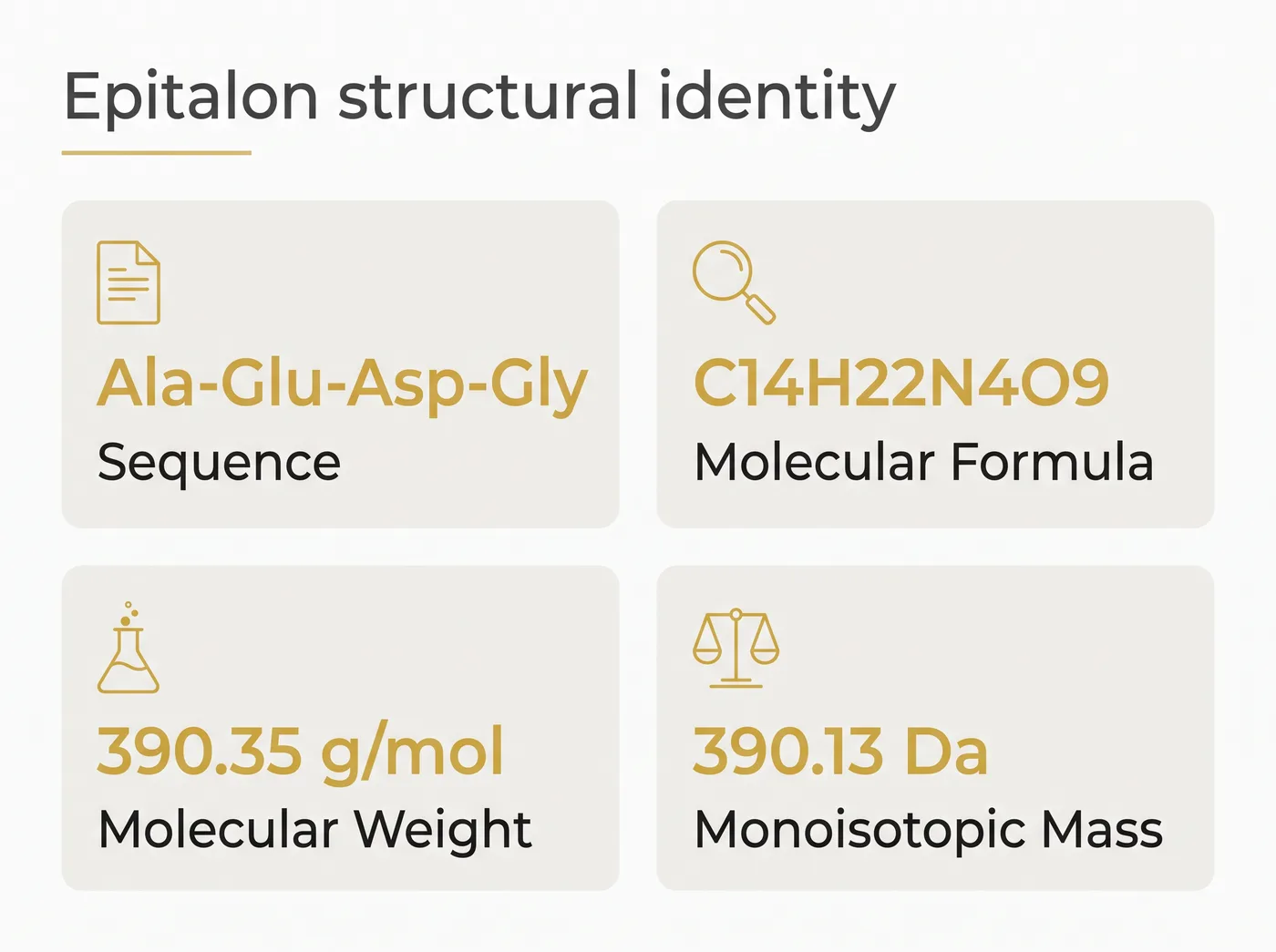
Epitalon is a short synthetic tetrapeptide consisting of four amino acid residues with the sequence Ala-Glu-Asp-Gly. It has a molecular formula of C14H22N4O9 and a computed molecular weight of 390.35 g/mol. Laboratories typically source the compound as a sterile, lyophilised powder that requires preparation in a compatible solvent prior to chromatographic analysis. Its structural identity is verified via liquid chromatography-mass spectrometry targeting a monoisotopic mass of 390.13 Da, while chemical purity is assessed using reversed-phase high-performance liquid chromatography.
Key takeaways
- Epitalon is a tetrapeptide composed of just four amino acids, making it significantly smaller than most synthetic proteins.
- Its molecular weight of 390.35 g/mol is verified during analysis using mass spectrometry.
- Standard mass spectrometry can be fooled by sequence-scrambled variants, requiring careful sample preparation to confirm the exact structure.
- The compound is supplied as a lyophilised solid to preserve chemical stability and prevent thermal degradation.
- High-performance liquid chromatography determines the absence of synthesis errors, though a clean chromatogram alone does not prove structural identity.
A remarkably brief sequence
When you look at synthetic peptides, most resemble long, complicated freight trains of amino acids. Epitalon is more like a bicycle. It is a tetrapeptide, meaning it consists of exactly four amino acid residues linked together. The sequence is L-Alanyl-L-glutamyl-L-aspartyl-glycine, which chemists routinely abbreviate to Ala-Glu-Asp-Gly, or simply AEDG. Because it is so brief, the molecule is exceptionally light, with a computed molecular weight of 390.35 g/mol.
This simplicity translates to a tidy molecular formula of C14H22N4O9. In chemical databases, you will find it catalogued under the primary CAS registry number 307297-39-8, though literature occasionally uses the alternative spellings Epithalon or Epithalamin tetrapeptide. Its small footprint means it lacks the complex folding structures seen in larger molecules, making the analytical focus purely about ensuring those four specific beads are strung in the correct order.
The synthesis assembly line
You do not find Epitalon sitting in a natural reservoir waiting to be extracted. It is built in a laboratory from scratch, almost exclusively using Fmoc solid-phase peptide synthesis. This method anchors the first amino acid to a resin, then systematically adds the next one, removes a protective chemical cap, and repeats the steps. Once the four-piece chain is complete, the peptide is cleaved from its resin anchor using a strong acid, typically trifluoroacetic acid.
The problem with building things one molecule at a time is that sometimes the chemistry misses a step. If a coupling step fails, the result is a truncated three-amino-acid chain. These deletion sequences are the primary impurities laboratories look for when assessing raw material. They are chemically similar to the target molecule, which means they can be stubbornly difficult to separate during the purification phase.
The sequence scramble problem
Standard mass spectrometry acts like a scale checking the exact weight of a parcel. For Epitalon, a liquid chromatography-mass spectrometry instrument looks for a monoisotopic mass of 390.138678 Da. If the instrument sees that number, it assumes the material is correct. But there is a glaring blind spot in this approach. If a synthesis error creates the scrambled sequence Glu-Ala-Asp-Gly instead of Ala-Glu-Asp-Gly, the molecular weight remains exactly 390.35 g/mol. The scale reads the correct weight, completely missing that the contents are assembled backwards.
To complicate matters, the N-terminal glutamic acid residue can cyclise to form pyroglutamate under certain chemical conditions. This reaction sheds a water molecule, subtly altering the total mass. If an analyst does not anticipate this structural shift during sample preparation, the resulting data can look like a failed batch rather than an expected chemical quirk. Resolving these positional isomers often requires tandem mass spectrometry, which shatters the molecule to read the pieces individually.
From liquid to lyophilised powder
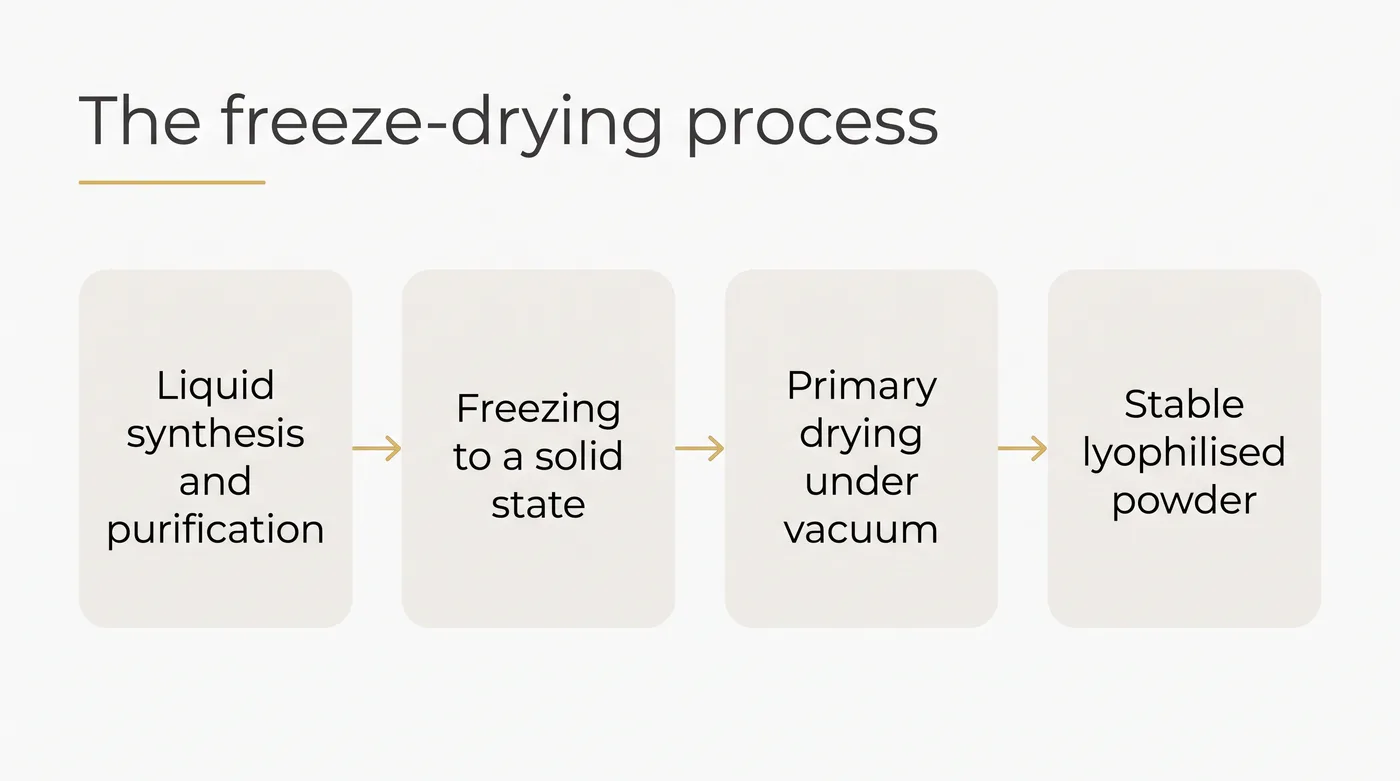
After synthesis and purification, Epitalon exists in a liquid solution. Shipping a fragile chemical soup across the country is an excellent way to ensure it degrades before it reaches a loading dock. To stabilise the material, laboratories use a freeze-drying process. The solution is frozen solid, and the surrounding pressure is dropped in a vacuum chamber. The frozen water sublimates directly into a gas, skipping the liquid phase entirely and leaving behind a stable, sterile solid powder.
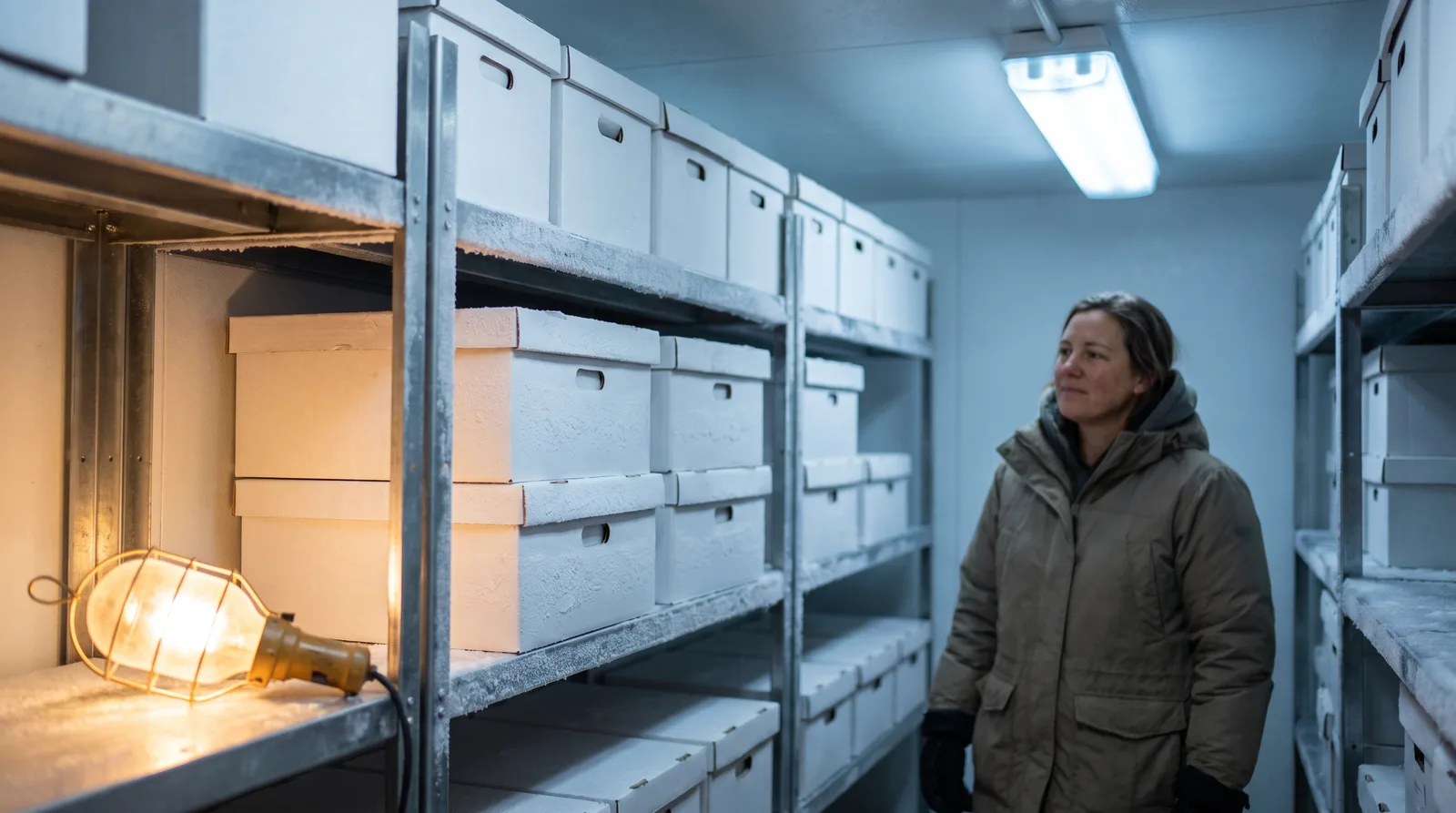
This lyophilised powder is highly resilient in the short term, allowing it to withstand ambient shipping temperatures for brief periods. However, moisture and heat are the eventual enemies of any dried peptide. Just like the short-chain Thymalin, Epitalon powder demands strict cold-chain management for long-term preservation. Biomedical-grade cold storage at -20 degrees Celsius is the standard requirement to prevent structural degradation over months or years.
Chromatography and proving purity
When a laboratory sets out to prove a sample is clean, they turn to reversed-phase high-performance liquid chromatography. The sample is introduced into a flowing mobile phase and forced through a tightly packed chemical column. Because different molecules interact with the column chemistry differently, they exit at varying speeds. A detector measures them as they cross the finish line. A 99 percent purity result means that 99 percent of the detector signal came from one single, unified peak, while the remaining one percent represents synthesis errors that trailed behind.
| Analytical Method | What it Measures | Limitations |
|---|---|---|
| Reversed-Phase HPLC | Chemical purity and absence of synthesis errors | Cannot confirm exact structural identity |
| Mass Spectrometry | Molecular weight (390.35 g/mol) | Cannot distinguish scrambled sequence isomers |
| Endotoxin Testing | Presence of bacterial contamination | Does not analyse the peptide itself |
This is why a certificate of analysis requires two distinct tests. Chromatography proves the sample is pure, but it cannot tell you what the pure substance actually is. Mass spectrometry proves the substance weighs the correct amount, but it struggles to quantify trace impurities. Only by running both methods concurrently can a facility verify the identity of the solid.
Verifying the final document
The final barrier between a quality chemical and a questionable white powder is the paperwork. A credible laboratory report must list a batch or lot number that physically matches the vial. It should show a clean, sharp chromatography peak rather than a wide, jagged lump that suggests multiple compounds hiding in the same signal. A generic document lacking a specific test date or a named, identifiable facility is a massive red flag.
Transparency in these measurements is the only way to establish trust in laboratory supplies. For a concrete example of how strict these standards should be, you can review NuuVive's Epitalon, which is independently verified at 99.154% purity (Janoshik report #99782) and precisely quantified at 10.73 mg per vial.
Questions
What is the difference between Epitalon and Epithalon?
There is no chemical difference. They are simply alternative transliterations of the same Russian origin word. Both refer to the identical synthetic tetrapeptide with the sequence Ala-Glu-Asp-Gly.
Why is the exact mass slightly different from the molecular weight?
Molecular weight is an average based on the natural abundance of isotopes for carbon, hydrogen, nitrogen and oxygen on Earth. The exact, or monoisotopic mass, uses only the most abundant isotope of each element, which is the precise number a mass spectrometer looks for.
Does Epitalon require special lighting conditions for storage?
Yes, lyophilised peptides are susceptible to photodegradation. They should be stored away from direct light, which is why commercial laboratories frequently supply and store the powder in amber glass vials or opaque containers.
Sources
- nih.gov. National Library of Medicine
- nih.gov. National Library of Medicine
- HPLC analysis and purification of peptides (Methods in Molecular Biology 386). Springer
- Advances in Fmoc solid-phase peptide synthesis (Journal of Peptide Science). Wiley
- Design of freeze-drying processes for pharmaceuticals: practical advice (Pharmaceutical Research). Springer