
Quality and traceability
NuuVive sent its own BPC-157 off the shelf to Janoshik: the result
NuuVive Journal · · 4 min read
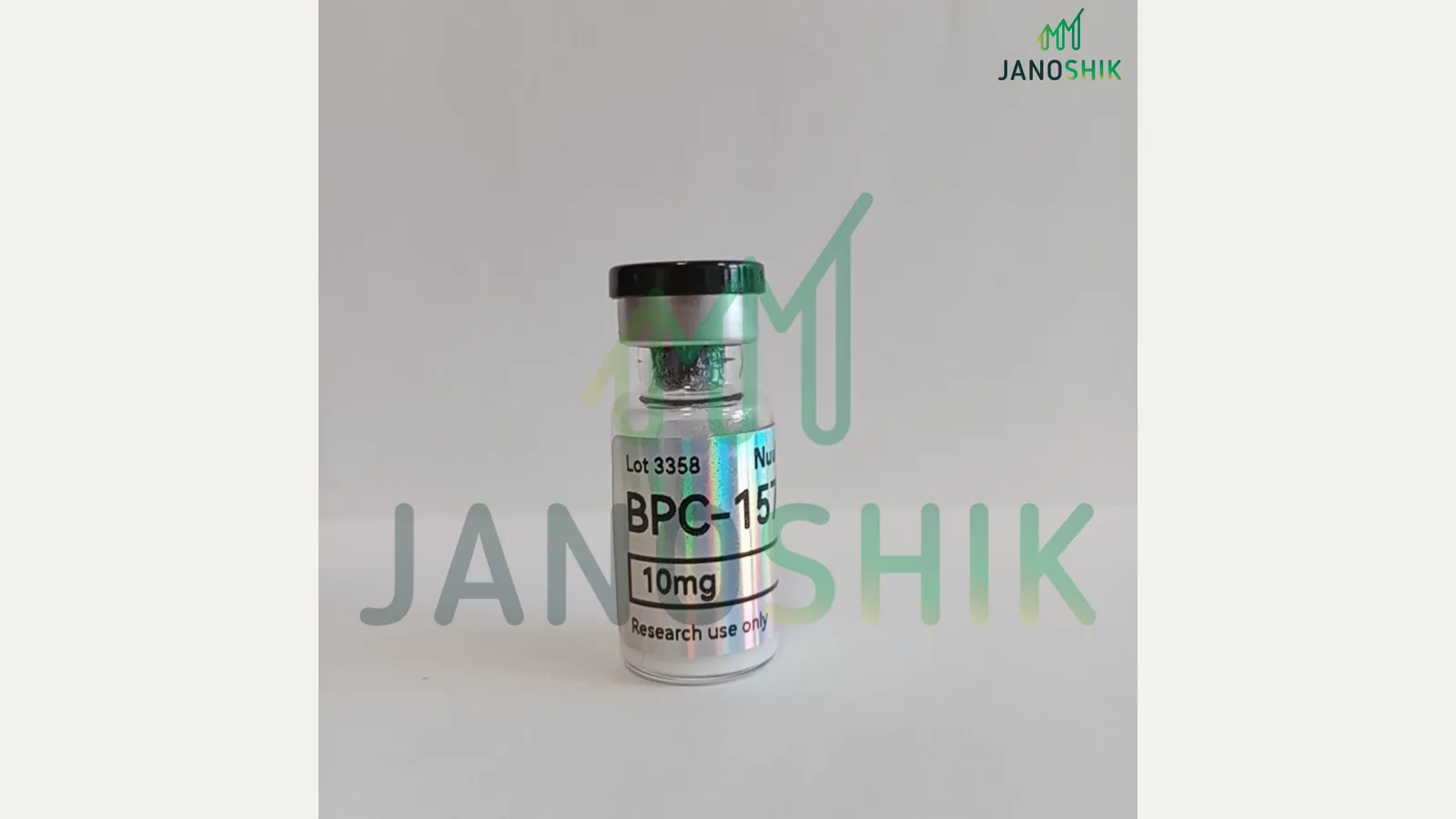
Short answer
In October 2026 NuuVive selected a sealed BPC-157 10 mg vial, Lot 3358, from its regular stock and sent it to Janoshik for analysis. The lab measured 11.52 mg of BPC-157 in the vial against 10 mg on the label, at 99.653% HPLC purity. The report is Janoshik task #244390 and can be checked on the lab's site with key 2D8DUEYJ2M7Y.
Key takeaways
- The vial was a sealed BPC-157 10 mg vial from regular NuuVive stock, Lot 3358, with the NuuVive label still on it.
- Janoshik measured 11.52 mg of BPC-157 in a vial labelled 10 mg.
- HPLC purity came back at 99.653%, with one small impurity peak at 0.347% of the total area.
- The full report is Janoshik task #244390, checkable at the lab with key 2D8DUEYJ2M7Y.
- The test was ordered and paid for by NuuVive, so the lot number on the report is the lot on the shelf.
Why test a vial that already has a lab report?
Most peptide stores, NuuVive included until now, show a lab report that came with the material. That report is real, but it describes a sample someone else chose, at a time someone else picked. A buyer has every right to wonder whether the vial in the parcel matches the vial in the PDF.
So NuuVive did the obvious, slightly nerve-racking thing: it pulled one ordinary vial off its own shelf, left the label on, and paid an independent lab to tell the world what was inside. No special batch, no hand-picked sample, no second chance if the number came back ugly.
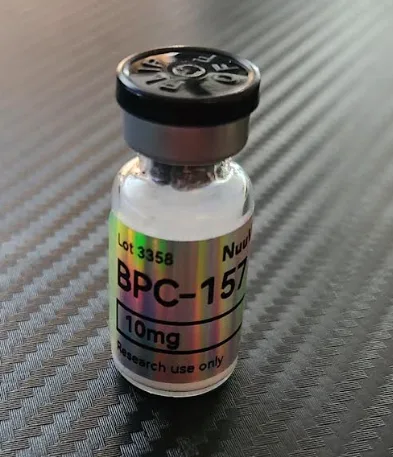
The vial was BPC-157, 10 mg, Lot 3358, sealed as a customer would receive it. The test ordered covered identity, amount and purity, plus the raw chromatography data, so nothing would arrive as a single unexplained percentage.
How the vial got from the shelf to the lab
The analysis was ordered from Janoshik on 16 October 2026. The vial was photographed before it left, bagged with the lab's order number, and shipped by UPS to the laboratory. Janoshik received it, gave it its own sample number and ran it on 23 October 2026.
The report names the client as NuuVive Peptides and the batch as Lot 3358, the same lot number printed on the vial. That matters more than it sounds. A certificate that does not name the lot on the vial is a nice document about some material, somewhere, and a lot number is the only thing that ties the paper to the powder.
The result: 11.52 mg and 99.653% purity
| Measure | Result |
|---|---|
| Compound identified | BPC-157 |
| Amount in the vial | 11.52 mg (label: 10 mg) |
| HPLC purity | 99.653% |
| Other peaks | one, 0.347% of the total area |
| Lot | Lot 3358 |
| Report | Janoshik task #244390 |
Purity here is the share of the chromatogram's total peak area that belongs to BPC-157. High-performance liquid chromatography pushes the dissolved sample through a column, and each substance leaves the column at its own time, so impurities show up as separate peaks instead of hiding inside the main one (USP chromatography). On this run the main peak held 99.653% of the area and one tiny neighbour held the remaining 0.347%.
The amount is a separate measurement, and it is the one that surprises people. The vial says 10 mg; the lab found 11.52 mg. A little overfill is common practice for lyophilised peptides, and it is the friendly direction to be wrong in. Purity and amount answer different questions, which is why analytical guidance handles assay (how much) and purity (what else is there) as different characteristics, each with its own validation (ICH Q2(R2)).
How to check the report yourself
Trusting a screenshot would rather defeat the point. The report lives on the laboratory's own site as Janoshik task #244390, and the lab's verification key for it is 2D8DUEYJ2M7Y.
- Open the report on Janoshik's site, not a copy.
- Check that the task number reads #244390 and the batch reads Lot 3358.
- Check the sample: BPC-157, 10 mg.
- Compare the amount (11.52 mg) and purity (99.653%) with the figures above.
If any of those four checks fails, the document is not the one described here. That habit works on any certificate from any store, and the check requires about a minute.
What one test proves, and what it does not
One vial from one lot is a snapshot, not a promise about every vial ever made. It proves that Lot 3358, as sold, contained BPC-157 at 99.653% purity and slightly more material than the label states. It says nothing about other lots or other products, which keep their own reports.
That is also why the test was worth doing. Every product page links the lab report for its material, and this result shows that a vial bought from the shelf lines up with the paperwork. For the rest of the catalogue, the lab reports are all in one place.
Questions
Who paid for the Janoshik test of NuuVive's BPC-157?
NuuVive ordered and paid for the analysis itself. The vial was a sealed BPC-157 10 mg vial from regular stock, Lot 3358, and the report names NuuVive Peptides as the client.
Why does a 10 mg vial contain 11.52 mg?
Peptide vials are commonly filled slightly above the label amount. The lab measured 11.52 mg of BPC-157 in this 10 mg vial, about 15% over the label.
What does 99.653% purity mean?
On the HPLC chromatogram, 99.653% of the total peak area belonged to BPC-157. The only other peak was 0.347% of the area.
How can the report be verified?
Open Janoshik task #244390 on the laboratory's own site and check the batch (Lot 3358), the sample (BPC-157, 10 mg) and the results. The verification key is 2D8DUEYJ2M7Y.
Sources
- Janoshik test report #244390: BPC-157 10 mg, Lot 3358. Janoshik Analytical
- Chromatography (PDG harmonised general method). United States Pharmacopeia
- ICH Q2(R2) Validation of analytical procedures. ICH