
Policy and economics
Why GLP-1 medications cost what they cost in the United States
NuuVive Journal · · 8 min read

Short answer
GLP-1 medications carry exceptionally high prices in the United States because manufacturers hold extended patent monopolies that entirely block generic competition. Unlike other nations, the United States government does not negotiate prescription drug prices at a national level. This regulatory void allows corporations to set massive list prices, while heavily funding lobbying campaigns to force government insurance programmes to absorb those costs. The result is an enormous financial gap between the minor base cost of chemical manufacturing and the final retail price presented to the public.
Key takeaways
- The United States pays significantly more for GLP-1 medications than peer nations due to a complete lack of centralised price negotiation.
- Base manufacturing costs for these synthetic compounds represent a tiny fraction of their final retail list prices.
- Pharmaceutical companies build dense patent thickets to delay generic alternatives and artificially extend market exclusivity.
- Manufacturers spend millions of dollars annually on federal lobbying to secure government insurance coverage for high-priced medications.
The quiet gap between making a chemical and selling it
When you look closely at the economics of GLP-1 medications, the first thing that stands out is the vast silence between what a chemical costs to make and its final retail price. Independent economic analyses routinely calculate the basic manufacturing overhead for these compounds to be remarkably low. Researchers look at the active pharmaceutical ingredients, the standard production processes, and normal profit margins to establish a baseline cost. They calculate a cost-based price that includes generous allowances for tax and formulation.
Those analyses determine that a one-month supply of semaglutide could be manufactured for a minimal sum. This estimated manufacturing cost sits in stark contrast to the prices set in the United States market, which are incredibly high. The physical liquid in the vial is the least expensive part of the entire commercial apparatus.
This massive disparity between base production costs and retail prices highlights the unique pricing power held by pharmaceutical manufacturers. In environments that lack centralised price controls, the cost of the physical chemical becomes a rounding error on the final ledger. For analytical chemists and laboratory professionals who evaluate peptide synthesis every day, this confirms a basic truth. The high cost of pharmaceutical products is driven entirely by regulatory and market factors, not by the fundamental complexity of creating the molecule itself.
How crossing an international border changes the maths
The United States health system largely refuses to negotiate prescription drug prices at a national level, a specific policy choice that sets it apart from almost every peer nation. This regulatory environment creates a curious situation where domestic prices far exceed those found in other developed markets. According to pricing data, the United States consistently pays the absolute maximum rate for semaglutide and tirzepatide products.
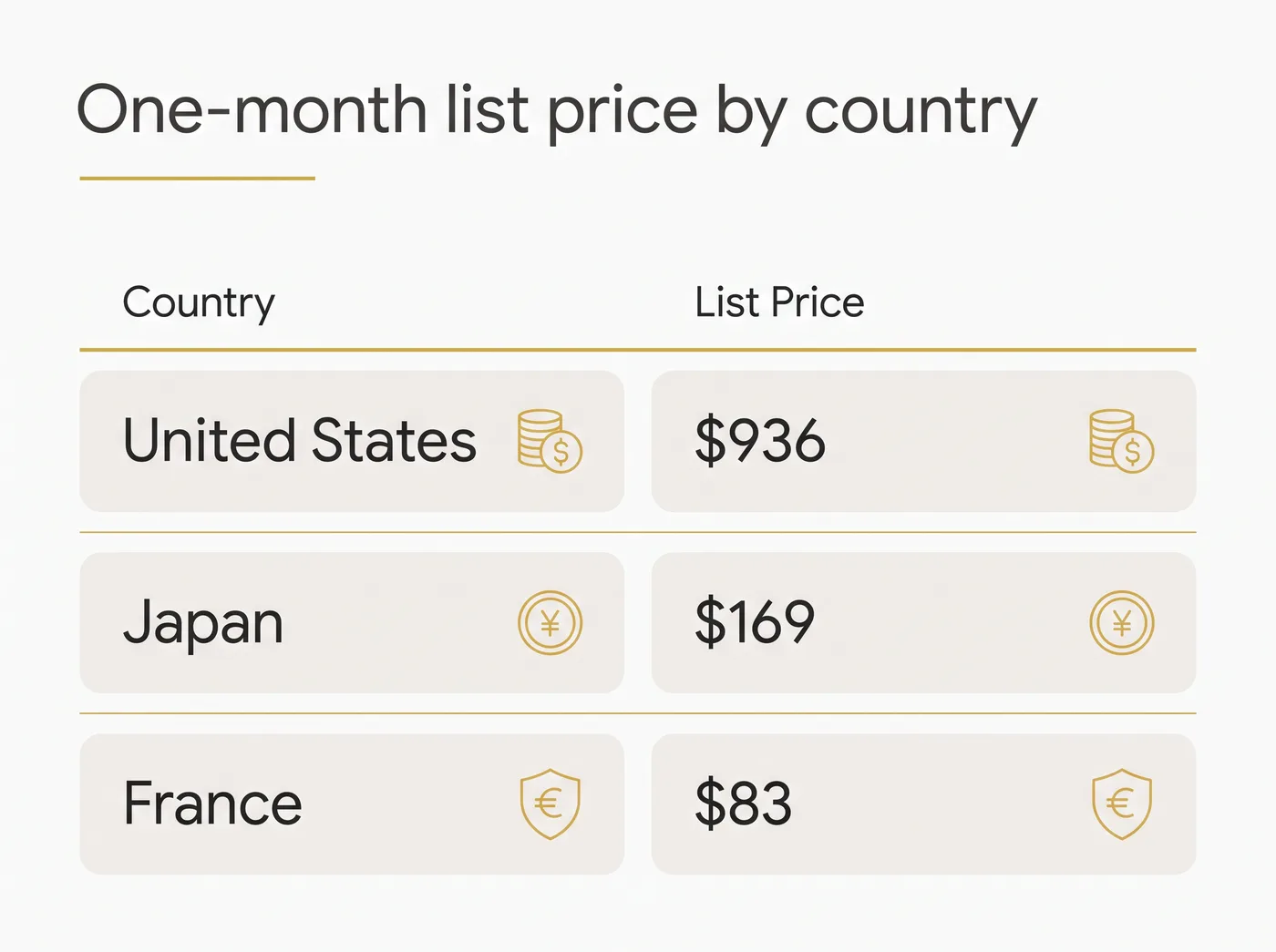
Consider the raw numbers. While the United States list price for a one-month supply of semaglutide sits at $936, the exact same supply was priced at just $169 in Japan Penn LDI. Move to Europe, and the costs drop further, with France recording a list price of $83 for the exact same monthly supply Penn LDI. This mathematical reality means the U.S. price is approximately 5.5 times higher than the next highest peer nation Penn LDI.
| Country | List Price for a One-Month Supply |
|---|---|
| United States | $936 |
| Japan | $169 |
| France | $83 |
These figures demonstrate that drug pricing is strangely bound by geography. A chemical synthesised in the same facility and packaged in the exact same manner carries wildly different costs depending on where the shipping label says it is going. This variation shows quite plainly that list prices are driven by regional regulatory frameworks, market tolerance, and local laws, not by the intrinsic value of the chemical compound.
Patent thickets and the art of extending a monopoly
To maintain these extraordinary list prices, pharmaceutical companies rely heavily on extensive intellectual property portfolios. This strategy is formally known as building a patent thicket. It involves filing dozens of overlapping patents to delay generic competition by making the legal framework impossible to navigate. By securing multiple patents on a single medication, manufacturers ensure their market exclusivity extends decades beyond the original discovery of the base molecule.
A company does not simply patent a molecule and walk away. Pharmaceutical companies file numerous U.S. patent applications for a single medication. The primary compound patents are routinely extended far beyond their original expiration dates.
Once the primary U.S. compound patents are extended to block generic entry, the real paperwork begins. Beyond the base molecule, manufacturers file secondary patents on minor formulations, methods of application, and the physical plastic delivery devices. Device patents covering specific hardware or delivery systems can extend exclusivity even further into the future. These carefully constructed legal barriers prevent alternative manufacturers from offering more affordable generic versions, locking in high retail prices for the foreseeable future and keeping the competition trapped in court.
The expensive role of corporate lobbying
Because U.S. list prices are set at such a premium, broad access fundamentally depends on insurance coverage footing the bill. Current federal law strictly prohibits Medicare Part D from covering certain classes of medications, creating a massive barrier to taxpayer-funded reimbursement. To access billions of dollars in federal funds, pharmaceutical manufacturers invest extremely heavily in lobbying Congress to change those laws.
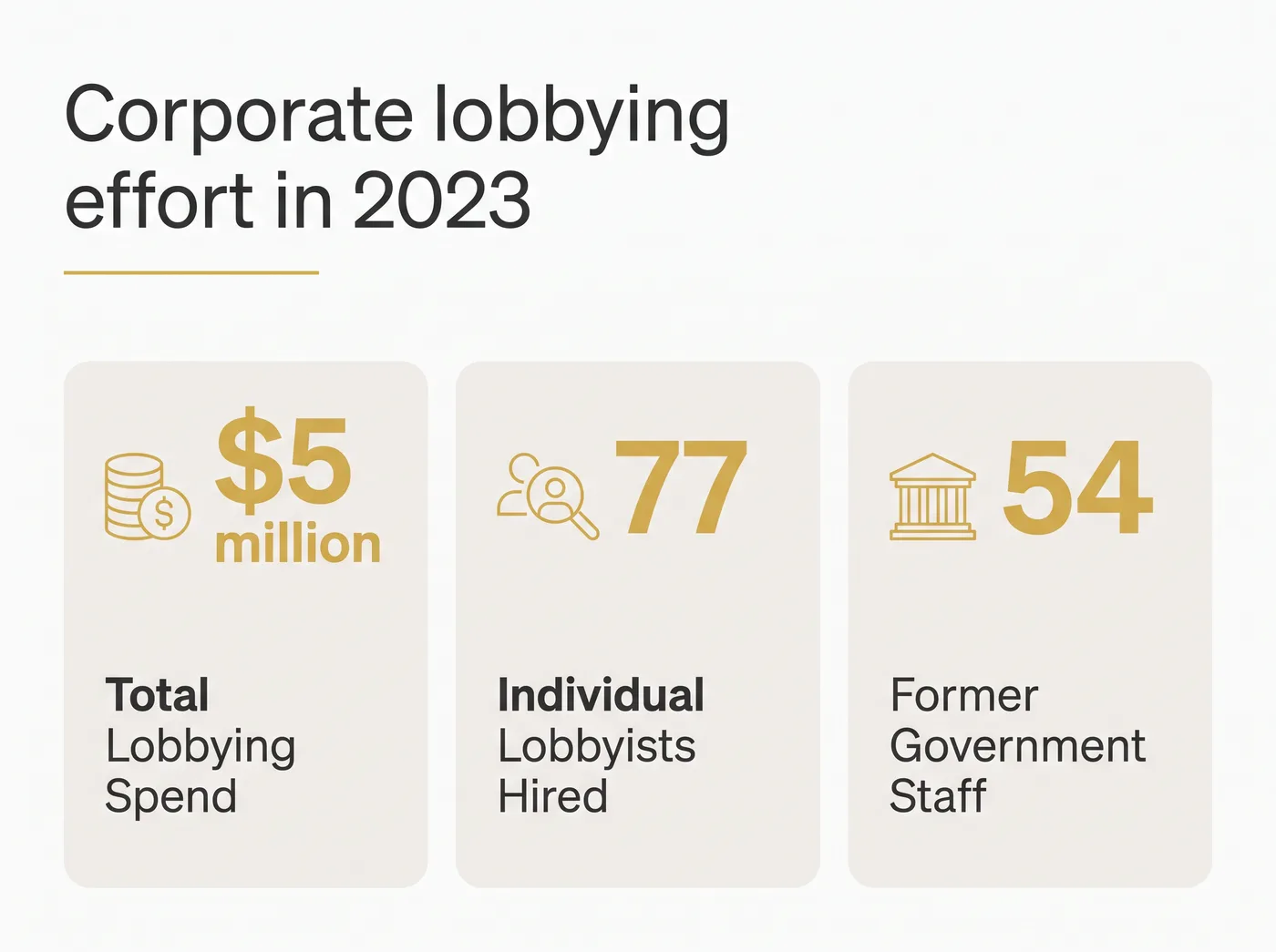
Public data reveals a massive surge in political spending aimed directly at passing legislation that would mandate Medicare coverage for these specific medications. In 2023, the primary manufacturer of semaglutide spent over $5 million on federal lobbying OpenSecrets. To execute this specific campaign, they hired 77 individual lobbyists across 13 different firms OpenSecrets. Notably, 54 of these lobbyists previously held government jobs, participating in a practice commonly known as the revolving door OpenSecrets.
This spending continues to accelerate at a rapid pace as manufacturers invest heavily to secure legislation. Their goal is simple: to force government insurance programmes to pay the high domestic list prices for these patented compounds opensecrets.org. When billions of dollars are on the table, a few million spent in Washington is simply a shrewd business expense.
The economic impact of forced government spending
Expanding federal insurance coverage to include these patented medications at their current list prices would profoundly affect national budgets. Health economists have modelled the budgetary impact of providing Medicare coverage to a large population of potential beneficiaries. Their findings consistently suggest a staggering financial burden on the national healthcare system, one that taxpayers would ultimately carry.
Even if domestic prices were forcibly reduced to align more closely with international markets, Medicare would still spend vast sums on these drugs over a prolonged period. Achieving exact cost neutrality, where the upfront expense is completely negated by downstream savings in other healthcare areas, would require the retail price to drop even further. The wide gap between these required price points and the current list prices illustrates the severe economic tension surrounding GLP-1 medications today.
While the pharmaceutical industry frequently points to research and development costs to justify these high prices, financial tracking indicates alternative allocations of capital. Manufacturers are currently spending heavily on shareholder enrichment via stock buybacks and dividend payouts while experiencing massive increases in market capitalization. The money is certainly there, but it is moving toward investors, not back into affordable research.
Generic versions and the wait for a free market
The timeline for when prices might decrease naturally is tied directly to the expiration of the patents discussed earlier. Once the dense patent thicket is eventually cleared, generic manufacturers can legally produce and sell the exact same chemical compounds. Generic competition introduces free-market dynamics that typically drive prices down to a fraction of the original branded cost, assuming the legal barriers are actually removed.
Economic models using active pharmaceutical ingredient shipment data calculate that cost-plus pricing for generic semaglutide will be highly affordable. Researchers estimate that a full year of generic semaglutide could be manufactured and sold profitably for a fraction of current costs once patents finally expire. This future projection further proves that current high costs are an artificial construct of intellectual property laws rather than an unavoidable expense of complex chemistry. Until those generic versions are permitted by law, the market remains locked in a high-price equilibrium shaped entirely by regulatory protections.
Research materials and the laboratory alternative
Understanding the economics of pharmaceutical pricing explains exactly why approved medications carry such significant costs. When a compound is evaluated by the FDA and meets the strict safe and effective standard, it gains access to the consumer market, but it also becomes entangled in a very costly economic framework. The retail price reflects patent monopolies, the vast expense of clinical trials, extensive lobbying campaigns, and a healthcare system that refuses to negotiate prices centrally. It absolutely does not simply reflect the cost of chemical synthesis or raw materials.
For laboratory professionals, raw materials like semaglutide and tirzepatide are synthesised and sold strictly for laboratory research use. These research compounds are entirely free from the costs associated with delivery device patents, political lobbying, and massive consumer marketing campaigns. They provide analytical chemists with the exact molecular structures needed for controlled laboratory study, without the massive financial markups applied to retail pharmaceuticals.
Transparency in pricing and sourcing is essential for any laboratory conducting serious analysis. Understanding the sharp difference between a patented commercial product and a pure research chemical allows researchers to make informed purchasing decisions with absolute confidence. For quality reference materials backed by independent analytical testing, explore the shop.
Questions
Why do other countries pay less for the exact same GLP-1 medications?
Other developed nations rely on centralised national health systems that negotiate drug prices directly with pharmaceutical companies. This collective bargaining power forces manufacturers to agree to lower list prices in order to sell within those countries.
What is a patent thicket and how does it affect drug prices?
A patent thicket is a deliberate strategy where a pharmaceutical company files numerous overlapping patents on a single product, such as the formulation and the plastic delivery device. This creates a dense legal barrier that severely delays generic competition and keeps retail prices artificially high.
Why does the United States not negotiate drug prices centrally?
Federal laws have historically restricted government health programmes like Medicare from negotiating prescription drug prices directly with manufacturers. This regulatory setup shifts the massive burden of high costs onto taxpayers, allowing pharmaceutical companies to maintain maximum list prices.
How do generic alternatives impact pharmaceutical pricing?
When patents finally expire, alternative manufacturers can produce and sell the generic chemical compound legally. This introduces genuine free-market competition, which typically drives the final retail price down significantly compared to the original patented version.
Sources
- Key Lessons for Ethical and Affordable Access to GLP-1 Drugs - Penn LDI. upenn.edu
- opensecrets.org. OpenSecrets
- www.opensecrets.org. OpenSecrets